
Merto beside what your store runs today A CRM, an outsourced BDC, or follow-up by hand: what each does well, where a deal still slips, and what Merto does and does not do.

Your store's CRM Merto sits beside your CRM, and your CRM stays the system of record.
What it does well
It is the store's system of record: every lead, customer and sale in one place, with the reports a manager runs the store on.
Where a deal still slips
It knows what was typed into it. A promise made on the lot, or a text sent from a rep's own phone, is there only if the rep logs it.
What Merto does
A text or an email on a rep's Merto line and address lands on the deal's record with nobody typing it in. Merto keeps each deal's next step moving, and drafts the follow-up for the rep's yes.
What Merto does not do
Nothing connects the two today. Merto does not read from your CRM or write to it, so what your store requires in the CRM is still entered there.
How a lead gets into Merto today
- A customer texts or calls a rep's Merto line.
- A lead email from a listing site or your web form is forwarded to that rep's Merto address.
- The rep tells Merto about a walk-in in one sentence.
- A rep brings in their own list from a spreadsheet.

An outsourced BDC A BDC is a team of people. Merto is each rep's own assistant, on that rep's own line.
What it does well
A trained team answers new leads and sets appointments, including in the hours your own people are off.
Where a deal still slips
The customer starts with someone they will not meet. The rep is handed an appointment, and what comes after the visit is usually back with the rep.
What Merto does
It writes to a customer as that rep's assistant, and the whole conversation stays on the deal's record. Each kind of message has its own setting: off, draft or automatic. A new rep starts on draft.
What Merto does not do
Merto is software. It never calls a customer on its own. A rep calls from their own line, and Merto follows up in writing.
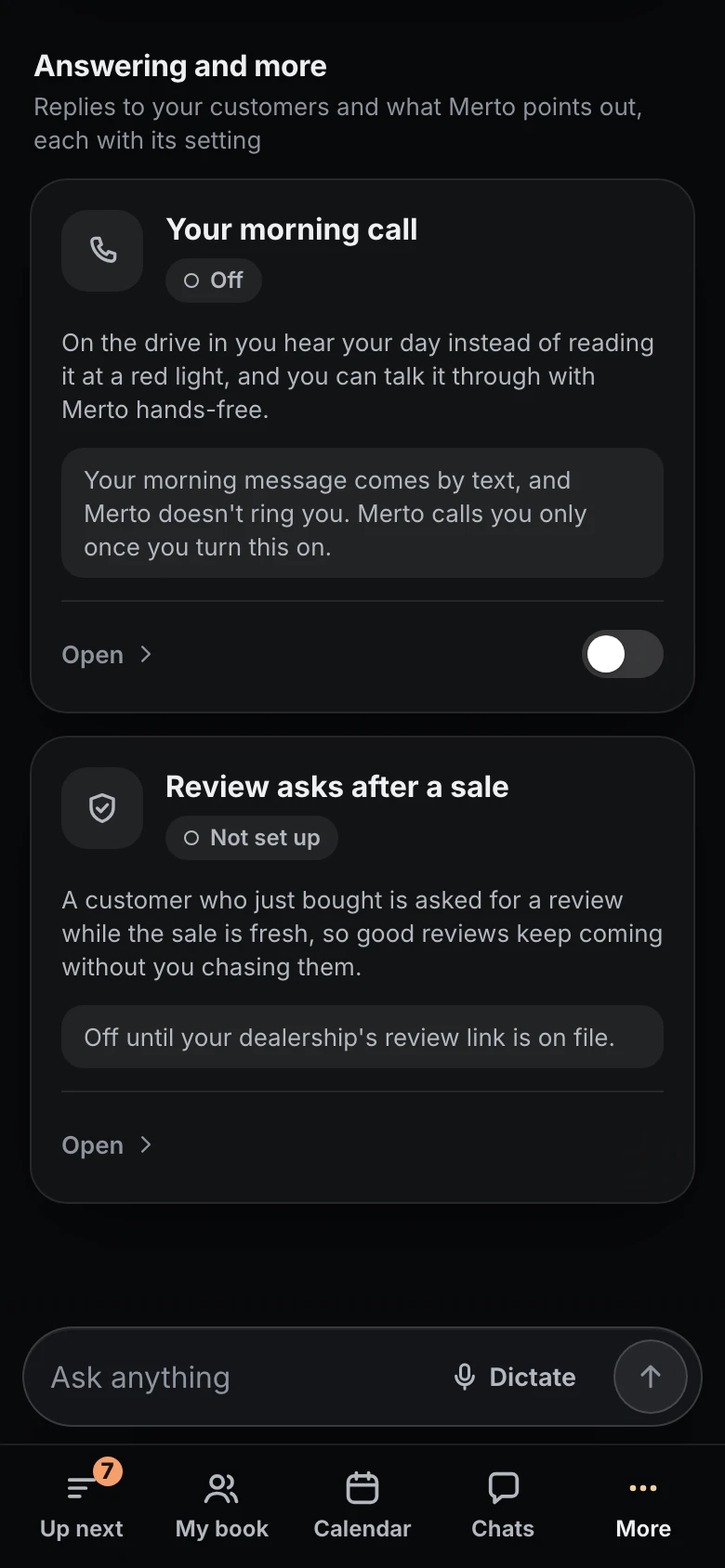
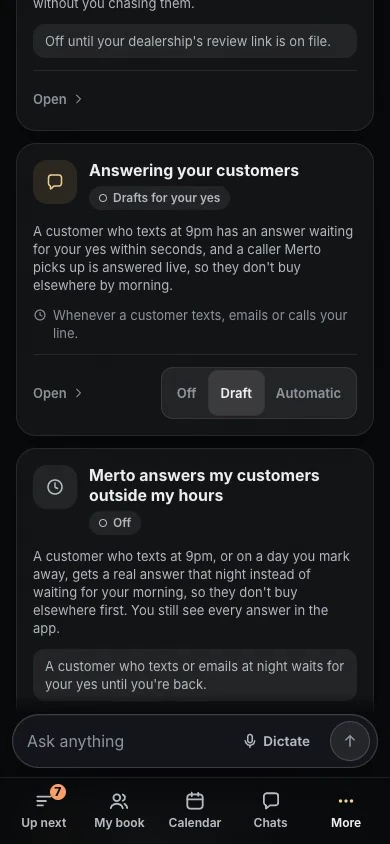
In Merto's settings, a rep moves one kind of message from automatic to draft.
Shown with a made-up store and made-up customers.

Follow-up by hand Every promise is kept in the rep's head, a notebook or a phone reminder.
What it does well
The rep knows the customer, so the message sounds like the rep and says the right thing. There is nothing to buy and nothing to set up.
Where a deal still slips
Car deals die in the next step nobody owns, because every call-back, quote and promise depends on the rep remembering it.
What Merto does
The rep tells Merto what happened, in a text or in the app. Merto keeps the record, sets the reminder, and drafts the follow-up when it is due.
What Merto does not do
Merto does not sell the car. The visit, the price and the promise stay the rep's. A new rep starts on draft. On draft, each reply waits for the rep's yes.
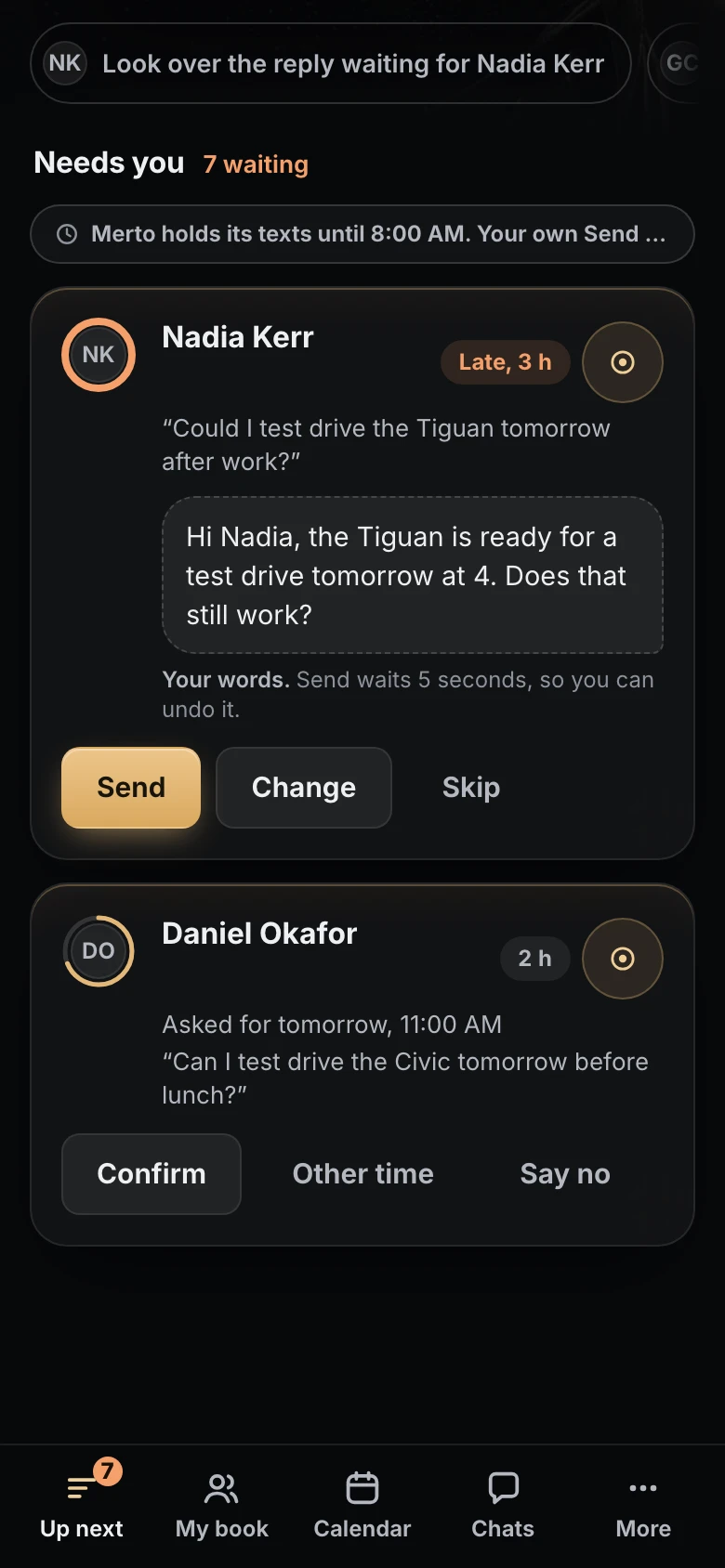
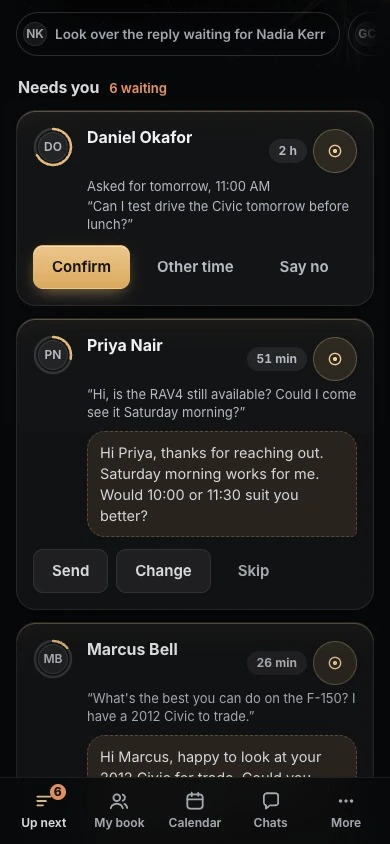
Up next in the rep's app: a reply waiting on the rep's yes.
Shown with a made-up store and made-up customers.